One standard construction unit covers about 10 workers on a 40-hour week; OSHA sanitation guidance (29 CFR 1926.51) sets one toilet per 20 workers as a baseline and adds a second for crews of 20 to 39, so a 30-person…
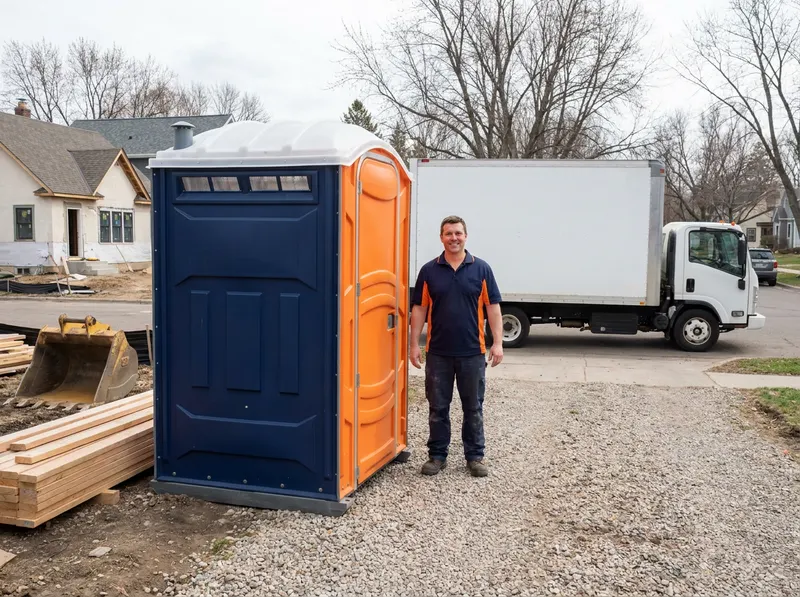
One standard construction unit covers about 10 workers on a 40-hour week; OSHA sanitation guidance (29 CFR 1926.51) sets one toilet per 20 workers as a baseline and adds a second for crews of 20 to 39, so a 30-person framing crew in Prospect Park needs two units, and a 45-person crew needs three. Counting heads before delivery prevents a single unit from filling its 60-gallon tank mid-week, which is the most common cause of an off-schedule emergency pump. Mill City Portable Toilet Rental sets a weekly service route across Northeast (Nordeast), Longfellow, Seward, and Camden so each unit is pumped and restocked on the same day every week.
Unit choice follows the job. A standard non-flush unit suits a rough-in or excavation phase where dust and mud dominate; an ADA-compliant unit, roughly 5 feet wide with a floor-level entry, is required when a public-facing or accessibility-regulated project needs wheelchair access; a flushing unit with an interior sink fits a longer finish-out phase where drywall and paint crews want cleaner conditions. A separate hand-wash station with a 22-gallon fresh-water tank serves food-adjacent or health-inspected sites. On a downtown high-rise near Loring Park with tight sidewalk frontage, the compact standard unit footprint of about 12 square feet places against a fence line without blocking the pedestrian path.
Minnesota winter changes the math. Below freezing, the waste tank needs a non-toxic antifreeze charge to keep the holding solution liquid, and units are staged out of prevailing wind and drifting snow so the door does not freeze shut. Placement matters year-round: a unit set on firm gravel or plywood near the site entrance off a plowed access road on a Camden or Cedar-Riverside lot stays reachable for the weekly pump truck; a unit stranded behind a locked gate or fresh backfill gets missed. If then: if the driveway or alley cannot take a service truck, position the unit within about 25 feet of a spot the truck can reach.
A construction rental differs from an event rental in billing and cadence. A construction unit is billed monthly with weekly servicing built in and stays on site for the full project run; an event unit is billed for a single day or weekend with no interim service. Ordering a single day-rate unit for a six-month Powderhorn Park renovation leaves it unpumped and unusable within days, so multi-month job sites take the monthly construction rate.
Every job gets a firm, written price after a free on-site visit.
Tell us about your construction site toilet rental job in Minneapolis and we'll send a clear, written quote, usually the same day.
 Mill City Portable Toilet Rental